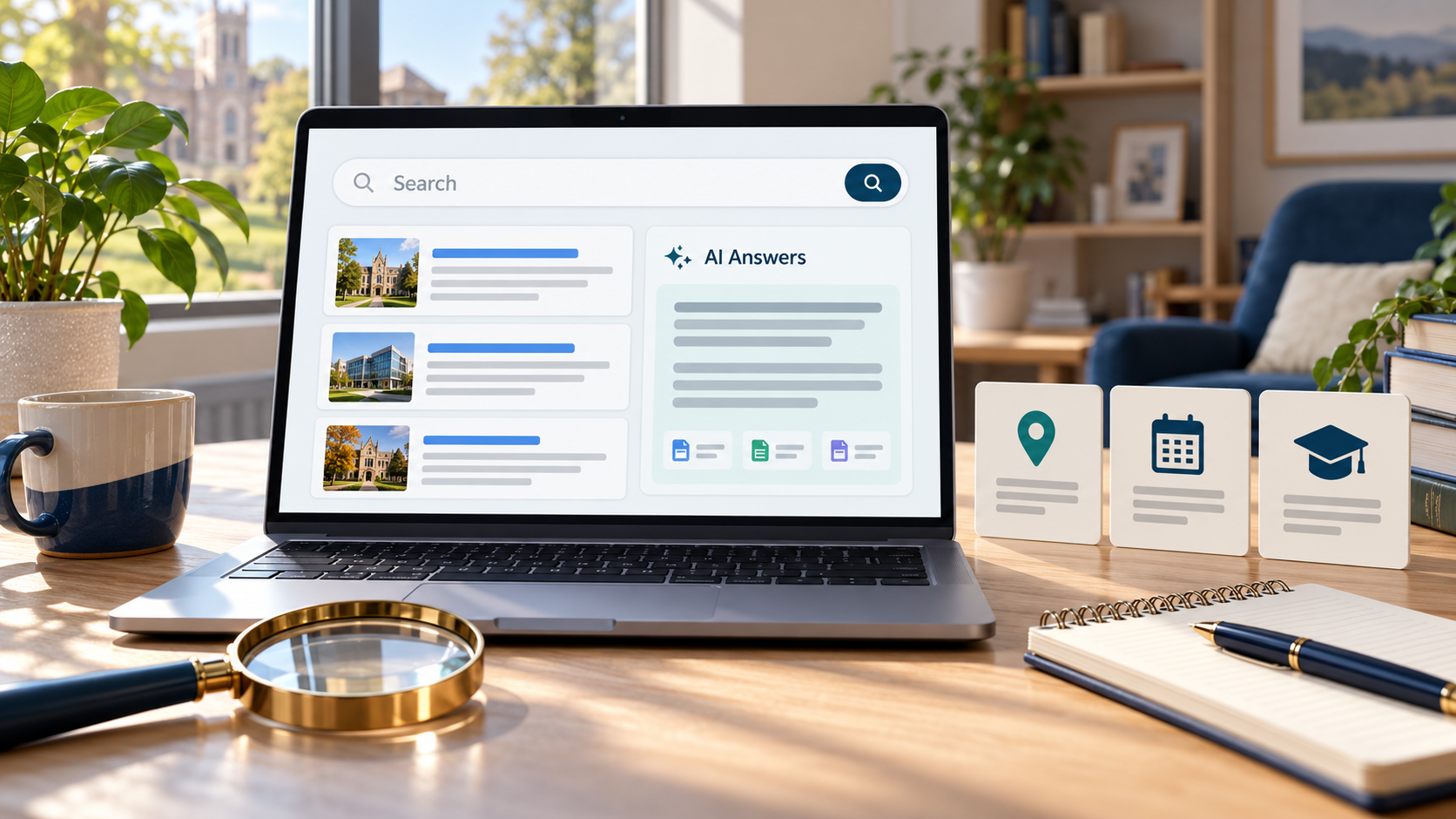
An SEO proposal lands in your inbox. It offers technical optimization, on-page improvements, link building, local listings, and content strategy.
You understand the price. You are less sure what the school will receive.
Knowing the different types of SEO makes that conversation much easier. You can ask which problem a service will solve, what will change on your website, and how the work will be checked.
The main working categories are on-page SEO, off-page SEO, technical SEO, and local SEO. These are practical industry labels rather than a single official classification. They overlap, and the right priority depends on the problem your school is trying to solve.
On-page SEO: make each page useful and understandable
On-page SEO concerns the content and elements of an individual page: its title, headings, explanation, images, and relevant links.
Consider a real estate school with a course page that says little beyond “Start your future today.” A visitor still needs the actual program name, delivery format, schedule, prerequisites, and the next enrollment step.
On-page work would make those answers visible and organize them logically.
A useful deliverable from an SEO provider might include:
- A revised course description with current details.
- A clear main heading and descriptive search title.
- A short search description that accurately previews the page.
- Relevant links to prerequisites, schedules, or application instructions.
- Image descriptions that match what the pictures show.
Google’s guidance on title links recommends descriptive, concise titles that distinguish pages. Search titles are a way to explain your content; they are not a space to repeat every possible keyword.
Ask your provider: “Show me one page before and after the proposed changes. What will a prospective student understand better?”
Technical SEO: make the website accessible to search systems
Technical SEO concerns how a website can be discovered, crawled, processed, and indexed.
Typical work includes investigating inaccessible pages, incorrect indexing settings, confusing duplicate URLs, broken redirects, and website performance problems.
For example, your school may launch a new website while leaving a development setting that instructs search engines not to index it. Another school may publish excellent program pages that are only reachable after logging in.
Neither problem is solved by writing more blog posts.
Google’s URL Inspection tool can help a verified site owner investigate what Google knows about a page and test its current accessibility. A successful live test alone does not guarantee indexing.
Ask your provider: “Which important URLs have a confirmed technical problem, and how will you verify the repair?”
Off-page SEO: build credible connections beyond your website
Off-page SEO describes work related to your website’s reputation and connections elsewhere on the web. Relevant editorial links are one part of that.
A local employer might link to the specific program it recommends to employees. A professional association might include your school in a legitimate member directory. A community partner might reference a useful guide you produced.
These connections should arise from real relationships and useful information.
Be cautious about packages selling large quantities of links with no explanation of where they come from. Google’s spam policies identify links created primarily to manipulate rankings as link spam.
A useful off-page project could be checking whether genuine partners link to the correct program page, correcting an outdated listing, or creating a resource a relevant organization would actually want to reference.
Ask your provider: “Why would this organization link to us if search rankings were not involved?”
Local SEO: help nearby people evaluate your location
Local SEO applies when location matters to the customer. It includes accurate business information, relevant location pages, and an eligible Google Business Profile.
For an in-person training school, a prospective student may need to compare travel distance, public transport, parking, and evening access.
Google explains local ranking through relevance, distance, and prominence. Your website cannot make your campus physically closer to every searcher, but you can provide an accurate account of what you teach and where students attend.
Local work is less applicable to a business operating exclusively online. Business Profile eligibility has specific requirements; a website alone does not establish eligibility.
Ask your provider: “Does our profile represent our actual location and operating model, and does the linked page answer a visitor’s practical questions?”
Where do content SEO, image SEO, and video SEO fit?
These labels usually describe a format or a narrower area of work.
Content SEO might include researching student questions and improving program explanations. Image SEO concerns making images understandable and usable in context. Video SEO concerns helping search systems and viewers understand video content.
A course demonstration video may require several kinds of work at once: an informative surrounding page, accessible media, and a clear title and description.
Other labels describe business models, such as ecommerce SEO, or audience scope, such as international SEO. They are not additional services every training school needs.
Which type should your school prioritize?
Use the symptom to choose the work:
- An important public page is excluded from search: investigate technical access and indexing.
- Visitors reach the page but cannot tell whether the course fits: improve the page’s information.
- Nearby applicants find an old address or wrong hours: correct local information.
- Genuine industry partners reference an outdated page: repair the destination and relationship.
- Your site has many articles but weak program pages: strengthen the pages that support enrollment decisions.
Several problems may coexist. Agree on an order instead of buying an equal amount of every service.
Turn an SEO proposal into a concrete work plan
For each proposed task, ask for the affected page, the reason for the work, the person responsible, and the evidence that will show it is complete.
“Improve technical SEO” is difficult to evaluate. “Correct the indexing setting on these four public course pages and check them in Search Console” is specific enough to review.
Steams Online can discuss your website requirements with you. Bringing a clear description of the problem helps turn a broad website conversation into useful decisions.
You do not need to become an SEO specialist. You need to know what is being improved, why it matters to your school, and what a completed job should look like.